|


|
|
|


My Perfect Storm - Captain Col
I spent 20 years Commercial Fishing, Mostly Tuna Surfacelining, but also, crayfishing and Bottom Longlining. Most trips consisted of 5 days at sea for each trip, So my Kids did not get to see me much while they were growing up, and oneday my eldest boy Chris, asked me to write some of my stories, so he could understand a bit of my life on the ocean.
This is one of those stories:
A Moment in Time (My “PERFECT STORM” 1996)
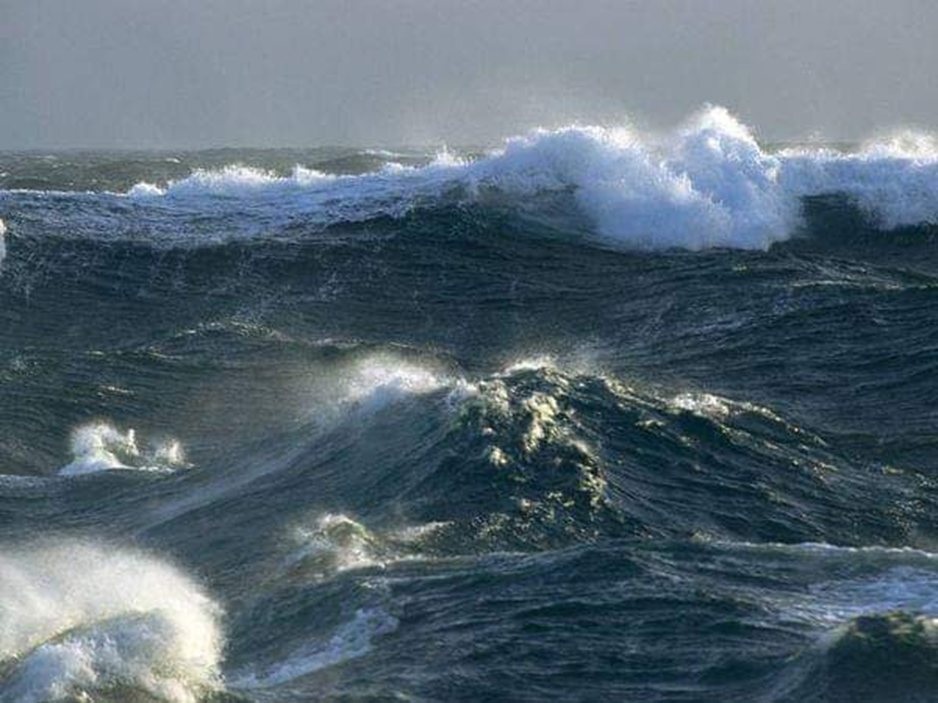 It was May 1996, we had discharged our previous trips catch, the Bluefin tuna were starting to run and we were all keen to get out there and get our share.
Boat full of ice, bait and stores to do 5 shots, the forecast was for 20knot southerlies the next day, full moon, and seas were currently flat-arse calm. The map looked OK; we had a high coming across the country and a low out to the east.
We left port at about 11am. The crew made last minute preparations and went below to catch some shut eye.
I looked at the temperature charts, and where the other vessels were planning to set their gear. I worked out a shot that historically was good, and it had some good temperature breaks and some good seamounts below us. By 8pm I had weather and map forecast updates, the forecast for the next day was unchanged at 20knots of southerly, however the map had shown the low to the east had started to deepen. I got the crew up as dinner was cooked, and after dinner they prepared the deck to set the gear. We were about 80 miles offshore, and it was still smooth seas and no wind. We started to set the gear at about 10pm, some good markings on the sounder and the 20miles of gear went out without a hitch. We were all feeling confident of a good catch, and after a cuppa we went down below for a kip (sea was still calm).
In the morning we were awoken to the sound of waves crashing over the decks, we all went up to the bridge to be greeted by about 30knots of wind and steep swells. I checked on latest forecasts.
Shit they had increased the days weather to 40knots now with outlook the same. Our Boat, the F.V. Caroline was a 46’ steel vessel and weighed in at 44tonne. We were the smallest tuna liner out there. The other 2 boats fishing the area were 70’.
I did the engine room check and fired her up, the boys had made me a coffee by now and we tuned into the northern beacon on the gear and proceeded towards its location, by 10am the wind was up to 50knots and in a moment of lapsed concentration while looking at instruments, I had let the old girl slip off a “nose into it” coarse we were punished by catching a steep wave on the port bow, that turned us beam-on and promptly laid us over on our side, the 11tonne of concrete in the deep keel did its job and brought us back upright. After cleaning up the mess in the galley we had got her straightened up again and heading straight into it. By now I was starting to dought our ability to safely haul the gear. In reasonable conditions it was a 6 to 8 hour job. In the heavy seas it was a struggle just to get to the end beacon. By 11am we had reached the northern beacon and the wind had now increased to 60knots. We decided against hauling even though we knew there was an extremely good fish at this end, as one of the hard jappa floats was being taken down. All we could do was watch the fish wrapping our gear up, as it pulled around other floats and was majorly tangling our gear. A tangled line is not the way to start a day’s hauling in these conditions. We kept the nose into it watching the mess get bigger as we awaited a weather update and new weather fax.
By 1.30pm the new forecast was out and I had a new map, the forecast was still for 40knots even though we had a good 60knots. However the map revealed why it had got so bad, the low to the east had deepened considerably and was now an onion. I informed the crew that we would not be hauling today, and would just hold the nose into it, hoping the sea would subside.
By 3pm the fuel pressure gauge had started dropping, A GM should run at about 80psi fuel pressure, ours had dropped to 50psi by now. I knew I had sludge in the bottom of the aft fuel tank, and had it booked to be opened up and cleaned on our next survey in about 4 months time. That forethought wasn’t helping me much now. These seas were certainly turning my aft tank fuel to porridge. By 4pm the fuel pressure had dropped to 20psi and the wind was still 60knots with no sign of abating. The swells were 6m and straight up and down. We could not afford to let her go beam on. One of my crew (John Ponga) asked how I worked out that the swells were 6m, and I pointed out that his feet were 2 meters above the waterline, he was 2 meters tall, and we had to bend down to look up at the tops of the swells at least another 2 meters above the roof of the bridge. He then said my estimate of 6m was on the conservative side. By now one of the crew (Shane Malcolm) decided to ask my opinion as to whether we were going to be OK. Of course I did what any good skipper would do, and said: Yeah of coarse we’ll be fine mate, this ol girl can handle any shit that Mother Nature throws at us. He felt a bit better. Inside I was fearing the worst, as the fuel pressure was down to stalling level, and to change the filters, the motor had to be turned off, we would not have survived going beam on in this. The tide was strong from the north, so with tide against the wind, the swells were just too steep to take the chance.
By 5pm my body was knackered from fighting to keep her nose into it, and I knew I couldn’t risk the fuel pressure dropping anymore, and a fuel pressure drop wasn’t a maybe, it was a certainty.
The dilemma was, that even if I was prepared to abandon my $30,000 worth of fishing gear, and head back home, that I simply couldn’t go home anyway, as home was west, beam on to the sea. We never would have made it. It was going to be dark soon, and good decisions had to be made fast. First call was for the crew to get me a lifejacket, and yes they were wise they came back up with one each. I then got the crew to discuss over and over again how they would deploy the chute with no hiccups. They have set the chute numerous times before, but never in these conditions, I was pleased at this point that I had not cheap-skated on the chute, and purchased the best available, and a couple of sizes bigger than required for my size vessel.
The crew were confident that they could complete the set within the 60seconds I had given them, and be back indoors in that timeframe.
We all then stood on the bridge counting waves and counting sets, trying to determine the biggest gap for us to safely make the turn to set the chute off the stern. It was now nearly 6pm and we had found our gap, I spun the wheel to starboard and gunned the throttle. We got picked up by the first one on the stern quarter and motored down its face until the nose buried into the trough rightup to the bridge windows. We popped back up, and that wave passed beneath us. The order was given to deploy the chute. They performed their task without a hitch, and raced back inside. Once in they shut the door, I instructed them to tie the door closed. They did ask why, and I told them that they would find out why soon enough. No sooner had they tied the door shut and sat down in the galley, when the first one hit us with an almighty roar, we looked out the back door window, and just saw a wall of water roll up the back deck (never saw the top), it slammed into the back of the wheelhouse, as we watched through the side galley windows, all we saw was water, then we looked up to the bridge windows and watched them disappear under the water as well, then watched as the water receded again as we popped back up. By now we were all aware of the gravity of the situation, and not too much talking was done.
I now took the opportunity to go down the engine room, and shut the motor down and change the fuel filters that were clogged to the max. It was the quickest change I have ever done, and fired the old girl up again. None of us felt like cooking that night and went to bed on empty tummies. If I had of been in phone range I would have phoned home to say my goodbyes as I really wasn’t expecting to make it through the night. All we needed was for the chute to break away, or the watertight integrity of any of the deck hatches to be compromised and it would have been all over.
I never slept a wink all night, but a lie down in a bed was at least a relaxation for the body. I think the crew managed to get some shuteye.
I was up at the crack of dawn, first checked the fuel pressure which was 70psi so I was comfortable with that, and wind had dropped to 50knots by now. I checked on the plotter as to our movements through the night, and was amazed to see we had travelled 30 miles INTO the weather, So that northerly current must have been a humdinger. By now the weather map was showing that the onion was moving further to the east and looked like it was going to give us some respite.
We decided to have a cooked breakfast while still on the chute. At 9am wind had dropped to 40knots, so we decided to pull the chute, and once again head to the gear. The chute was pretty much destroyed with gaping holes in it, but at least it survived long enough to get us safely through the night.
By the time we got to our gear, the wind had dropped to 30knots and was safe enough to start hauling the gear at 11am. The first mile and a half was such a mess, we had to just save what we could and cut the rest away. The fish that had been there, had given up waiting for us. The rest of the day was long and arduous with tangles and break offs, and not much fish left on it for us. By 2 am the next morning, we were still hauling and came to another bust off. I knew there was a light on the busted off section of 2 miles of line, and I informed the crew that if either of them saw the light, that they would be fired if they told me. I had had a gutsfull by now and turned for home with tail between my legs.
We got back to port about 11am and passed most of the fleet that was just heading out. I got straight on the blower to my engineer and told him to open up my back tank and cut through the internal baffles and clean out my aft fuel tank. I was not going to wait till survey this time.
When we birthed, the first thing I did was kneel on the jetty and kiss the concrete, it had never felt so good to be home. I always promised my crew that I would bring them home, and I had stuck to my promise. Too many of my friends and colleagues have not made it home over the 20 years I spent on the sea, and I and my crew nearly joined them on this trip. I was way more cautious of reading my weather maps (rather than just listening to the weather forecast) from then on.
And Stuck to a new motto that I came up with during that trip,
And that motto is:” I WOULD RATHER BE AT HOME WISHING I WAS AT SEA, THAN BEING AT SEA WISHING I WAS HOME” I live by that motto now, and don’t let it bother me if the weather turns out nice, and I have stayed ashore. The sea is not a place to play the chance game, it is too unforgiving.
Cheer’s Captain Col
This is one of those stories:
A Moment in Time (My “PERFECT STORM” 1996)
It was May 1996, we had discharged our previous trips catch, the Bluefin tuna were starting to run and we were all keen to get out there and get our share.Boat full of ice, bait and stores to do 5 shots, the forecast was for 20knot southerlies the next day, full moon, and seas were currently flat-arse calm. The map looked OK; we had a high coming across the country and a low out to the east.
We left port at about 11am. The crew made last minute preparations and went below to catch some shut eye.
I looked at the temperature charts, and where the other vessels were planning to set their gear. I worked out a shot that historically was good, and it had some good temperature breaks and some good seamounts below us. By 8pm I had weather and map forecast updates, the forecast for the next day was unchanged at 20knots of southerly, however the map had shown the low to the east had started to deepen. I got the crew up as dinner was cooked, and after dinner they prepared the deck to set the gear. We were about 80 miles offshore, and it was still smooth seas and no wind. We started to set the gear at about 10pm, some good markings on the sounder and the 20miles of gear went out without a hitch. We were all feeling confident of a good catch, and after a cuppa we went down below for a kip (sea was still calm).
In the morning we were awoken to the sound of waves crashing over the decks, we all went up to the bridge to be greeted by about 30knots of wind and steep swells. I checked on latest forecasts.
Shit they had increased the days weather to 40knots now with outlook the same. Our Boat, the F.V. Caroline was a 46’ steel vessel and weighed in at 44tonne. We were the smallest tuna liner out there. The other 2 boats fishing the area were 70’.
I did the engine room check and fired her up, the boys had made me a coffee by now and we tuned into the northern beacon on the gear and proceeded towards its location, by 10am the wind was up to 50knots and in a moment of lapsed concentration while looking at instruments, I had let the old girl slip off a “nose into it” coarse we were punished by catching a steep wave on the port bow, that turned us beam-on and promptly laid us over on our side, the 11tonne of concrete in the deep keel did its job and brought us back upright. After cleaning up the mess in the galley we had got her straightened up again and heading straight into it. By now I was starting to dought our ability to safely haul the gear. In reasonable conditions it was a 6 to 8 hour job. In the heavy seas it was a struggle just to get to the end beacon. By 11am we had reached the northern beacon and the wind had now increased to 60knots. We decided against hauling even though we knew there was an extremely good fish at this end, as one of the hard jappa floats was being taken down. All we could do was watch the fish wrapping our gear up, as it pulled around other floats and was majorly tangling our gear. A tangled line is not the way to start a day’s hauling in these conditions. We kept the nose into it watching the mess get bigger as we awaited a weather update and new weather fax.
By 1.30pm the new forecast was out and I had a new map, the forecast was still for 40knots even though we had a good 60knots. However the map revealed why it had got so bad, the low to the east had deepened considerably and was now an onion. I informed the crew that we would not be hauling today, and would just hold the nose into it, hoping the sea would subside.
By 3pm the fuel pressure gauge had started dropping, A GM should run at about 80psi fuel pressure, ours had dropped to 50psi by now. I knew I had sludge in the bottom of the aft fuel tank, and had it booked to be opened up and cleaned on our next survey in about 4 months time. That forethought wasn’t helping me much now. These seas were certainly turning my aft tank fuel to porridge. By 4pm the fuel pressure had dropped to 20psi and the wind was still 60knots with no sign of abating. The swells were 6m and straight up and down. We could not afford to let her go beam on. One of my crew (John Ponga) asked how I worked out that the swells were 6m, and I pointed out that his feet were 2 meters above the waterline, he was 2 meters tall, and we had to bend down to look up at the tops of the swells at least another 2 meters above the roof of the bridge. He then said my estimate of 6m was on the conservative side. By now one of the crew (Shane Malcolm) decided to ask my opinion as to whether we were going to be OK. Of course I did what any good skipper would do, and said: Yeah of coarse we’ll be fine mate, this ol girl can handle any shit that Mother Nature throws at us. He felt a bit better. Inside I was fearing the worst, as the fuel pressure was down to stalling level, and to change the filters, the motor had to be turned off, we would not have survived going beam on in this. The tide was strong from the north, so with tide against the wind, the swells were just too steep to take the chance.
By 5pm my body was knackered from fighting to keep her nose into it, and I knew I couldn’t risk the fuel pressure dropping anymore, and a fuel pressure drop wasn’t a maybe, it was a certainty.
The dilemma was, that even if I was prepared to abandon my $30,000 worth of fishing gear, and head back home, that I simply couldn’t go home anyway, as home was west, beam on to the sea. We never would have made it. It was going to be dark soon, and good decisions had to be made fast. First call was for the crew to get me a lifejacket, and yes they were wise they came back up with one each. I then got the crew to discuss over and over again how they would deploy the chute with no hiccups. They have set the chute numerous times before, but never in these conditions, I was pleased at this point that I had not cheap-skated on the chute, and purchased the best available, and a couple of sizes bigger than required for my size vessel.
The crew were confident that they could complete the set within the 60seconds I had given them, and be back indoors in that timeframe.
We all then stood on the bridge counting waves and counting sets, trying to determine the biggest gap for us to safely make the turn to set the chute off the stern. It was now nearly 6pm and we had found our gap, I spun the wheel to starboard and gunned the throttle. We got picked up by the first one on the stern quarter and motored down its face until the nose buried into the trough rightup to the bridge windows. We popped back up, and that wave passed beneath us. The order was given to deploy the chute. They performed their task without a hitch, and raced back inside. Once in they shut the door, I instructed them to tie the door closed. They did ask why, and I told them that they would find out why soon enough. No sooner had they tied the door shut and sat down in the galley, when the first one hit us with an almighty roar, we looked out the back door window, and just saw a wall of water roll up the back deck (never saw the top), it slammed into the back of the wheelhouse, as we watched through the side galley windows, all we saw was water, then we looked up to the bridge windows and watched them disappear under the water as well, then watched as the water receded again as we popped back up. By now we were all aware of the gravity of the situation, and not too much talking was done.
I now took the opportunity to go down the engine room, and shut the motor down and change the fuel filters that were clogged to the max. It was the quickest change I have ever done, and fired the old girl up again. None of us felt like cooking that night and went to bed on empty tummies. If I had of been in phone range I would have phoned home to say my goodbyes as I really wasn’t expecting to make it through the night. All we needed was for the chute to break away, or the watertight integrity of any of the deck hatches to be compromised and it would have been all over.
I never slept a wink all night, but a lie down in a bed was at least a relaxation for the body. I think the crew managed to get some shuteye.
I was up at the crack of dawn, first checked the fuel pressure which was 70psi so I was comfortable with that, and wind had dropped to 50knots by now. I checked on the plotter as to our movements through the night, and was amazed to see we had travelled 30 miles INTO the weather, So that northerly current must have been a humdinger. By now the weather map was showing that the onion was moving further to the east and looked like it was going to give us some respite.
We decided to have a cooked breakfast while still on the chute. At 9am wind had dropped to 40knots, so we decided to pull the chute, and once again head to the gear. The chute was pretty much destroyed with gaping holes in it, but at least it survived long enough to get us safely through the night.
By the time we got to our gear, the wind had dropped to 30knots and was safe enough to start hauling the gear at 11am. The first mile and a half was such a mess, we had to just save what we could and cut the rest away. The fish that had been there, had given up waiting for us. The rest of the day was long and arduous with tangles and break offs, and not much fish left on it for us. By 2 am the next morning, we were still hauling and came to another bust off. I knew there was a light on the busted off section of 2 miles of line, and I informed the crew that if either of them saw the light, that they would be fired if they told me. I had had a gutsfull by now and turned for home with tail between my legs.
We got back to port about 11am and passed most of the fleet that was just heading out. I got straight on the blower to my engineer and told him to open up my back tank and cut through the internal baffles and clean out my aft fuel tank. I was not going to wait till survey this time.
When we birthed, the first thing I did was kneel on the jetty and kiss the concrete, it had never felt so good to be home. I always promised my crew that I would bring them home, and I had stuck to my promise. Too many of my friends and colleagues have not made it home over the 20 years I spent on the sea, and I and my crew nearly joined them on this trip. I was way more cautious of reading my weather maps (rather than just listening to the weather forecast) from then on.
And Stuck to a new motto that I came up with during that trip,
And that motto is:” I WOULD RATHER BE AT HOME WISHING I WAS AT SEA, THAN BEING AT SEA WISHING I WAS HOME” I live by that motto now, and don’t let it bother me if the weather turns out nice, and I have stayed ashore. The sea is not a place to play the chance game, it is too unforgiving.
Cheer’s Captain Col
CONTACT US
|

